We probably all know what tapas are (if you don’t they are those little plates of food that come with your drink, popular all over Spain, particularly in Andalusia, and even more particularly in Seville, the “home of tapas”). But why are they called “tapas”, how did they originate and why have they become such an integral part of the lifestyle?
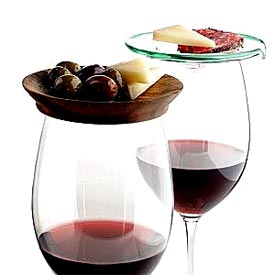 The first of these questions is relatively simple. In Spanish a “tapa” is a lid or cover, and the story is that tavern keepers would give their customers a slice of bread or ham to cover their drinks to keep out the dust and the flies (fruit flies are partial to a bit of sweet wine or sherry). It’s also possible that something strongly flavoured, like cheese, could be used to disguise the taste of poor quality wine.
This is also part of the answer to the second question, but not by any means the whole story. The most general reason probably goes back to Spain’s agricultural past. In the summer heat workers in the fields would start early, but the main meal of the day would be eaten just before the hottest part of the day, and was followed by the siesta, so to keep them going during the long mornings they would eat small snacks.
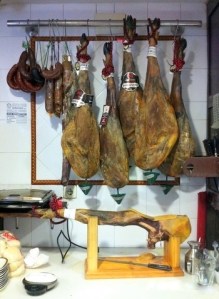 This is also a tale of three kings (but not The Three Kings). It is said that when the 13th century king Alfonso X “The Wise” became gravely ill his recovery was aided by eating small quantities of food and drink throughout the day, instead of full meals, while Felipe III in the early 17th century decreed that tavern keepers had to serve food with their drinks as a measure to combat the problem of drunkenness, especially among off duty soldiers and sailors. Later Alfonso XII (or possibly Alfonso XIII, an indication that the story may be apocryphal) is claimed to have been visiting a tavern in Cádiz and was served his drink with a slice of ham to keep out the sand blowing in from the beach. When he ordered another drink he asked for it with “the cover”. Over time the food that was served became more varied and more substantial, and going out for tapas became a common practice. The activity is also a very social one, and families and groups of friends would share their tapas while socialising, making this a very convivial activity in a way that is unusual for a more formal meal.
Introducing our History and Tapas Tour – a unique way to experience great food and learn about the history of both tapas and Seville
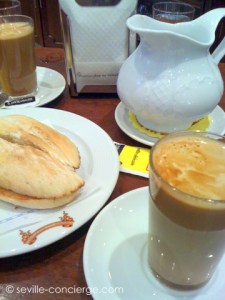 As the observant visitor to Seville will quickly notice, the day here has a different rhythm from what’s typical in either North America or the countries of Northern Europe. Most of the shops close for the afternoon, and then open again late into the evening, and the streets start to fill with people just when the guiris (foreigners) are heading home to bed. A lot of this has to do with the weather, of course. In summer (basically from April to October) it makes good sense to be out and about in the cool of the morning and the cool of the evening, and the consequent short nights and the afternoon heat means you really need that afternoon siesta.
 The main meal of the day is lunch (almuerzo), usually eaten between 2.00 and 4.00 pm. For working people who have to eat lunch out on a regular basis most tapas bars have a menu del día (a daily special), a two or three course meal with several options and usually including bread and a drink, costing between 6.50 and 12 euros. Don’t confuse the menu and the carta (main menu).
 But that’s for later. My first stop after arriving is usually the Cathedral Plaza and my favourite pastry shop for some elevenses with a view. This is the oldest part of town, and apart from visiting the Cathedral, its worth going through the Arco de la Rosa and taking a stroll through the Barrio El Pópulo to the Roman amphitheatre, which was rediscovered entirely by accident in 1980.
 Further on are the fortifications of Santa Catalina Castle, built to protect the city in the 17th century. The little turrets that you see dotted around the seafront are called baluartes, and are a distinctive feature of the city. Also here is the Parc Genovés, a botanical garden with many species brought over from the Americas. This is a fascinating place, with an artificial cataract and the strange topiary of the trees on the main path.
 Seville Concierge