Justina and Rufina – Two very Sevillana Saints

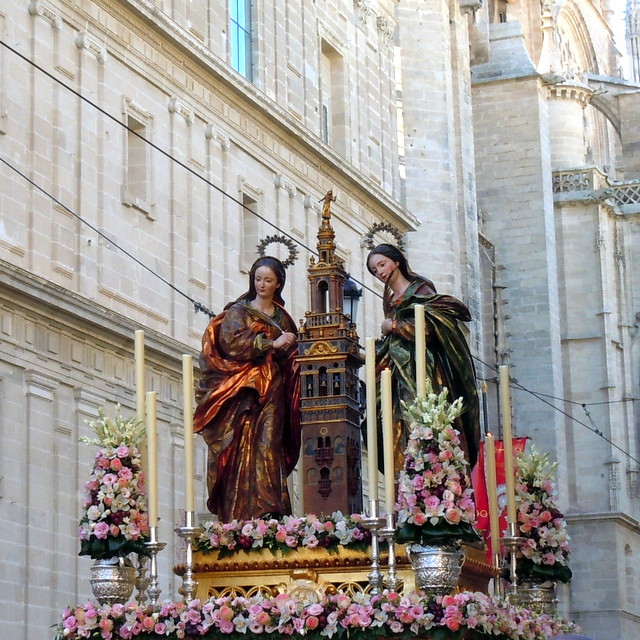
If you’re in, or have ever been to, Seville, you may have noticed pictures of two young ladies in mediaeval dress, surrounded by pottery and supporting a model of the Giralda tower between them. The picture is most probably a reproduction of the painting by Seville’s favourite artist, Bartolomé Murillo (1617-1682), and the two young ladies are the Saints Justa and Rufina. Although not technically the patron saints of Seville (that honour goes to Ferdinand III, who reconquered the city from the Moors in 1248) they are considered the special protectors of the Cathedral and the Giralda, which they preserved from harm during the 1755 Lisbon earthquake, and are also patrons of potters and pottery sellers.

justina rufinaAccording to legend they lived in the Triana neighbourhood of Seville in the 3rd century, during Roman times, where they made fine earthenware pottery, a trade by which they supported both themselves and many of the city’s poor. However, they refused to sell what they made for use in one of the city’s pagan festivals, and had all their pots and dishes smashed by angry locals. In retaliation they smashed a statue of the Goddess Venus, and for this crime they were arrested and imprisoned by the Roman prefect Diogenianus.

Unable to persuade them to renounce their Christian faith Diogenianus had them tortured on the rack and with hooks, and then forced them to walk barefoot to the Sierra Morena (a mountain range to the north of Seville). Seeing that their resolve was still unshaken they were deprived of food and water. Justa was the first to die, and her body was thrown into a well. Diogenianus expected that the death of Justa would break Rufina’s spirit, but when it didn’t she was thrown to the lions in the amphitheatre. However, even the lions refused to co-operate and devour her, and Diogenianus finally had her strangled (or possibly beheaded), and her body was burned.

Both bodies were recovered by Sabinus, the bishop of Seville, and given a Christian burial in 287. Their saints’ day is July 19.

Seville | Don Juan

After Cervantes knight errant Don Quixote, Spain’s most famous literary figure is surely Don Juan de Tenorio. The protagonist of countless poems, books and most famously of Mozart’s opera Don Giovanni, he is normally portrayed as a heartless womaniser and bragadoccio, and it as a notorious libertine that his name has passed into the popular imagination. In most versions of the story he comes to a much-deserved bad ending, being dragged away to hell by the statue of the father of one of the women he had tried to seduce, who he had killed in a duel.

But was there ever any such person? The Don is often said to be modelled on the historical Miguel de Mañara (1627-1679), and both his birthplace in Calle Levies and the Charity Hospital La Caridad, where as senior brother he made his name for charitable work among the city’s poor, feature in Seville City of Opera’s Ruta de Don Juan. However, since Tirso Molina’s The Trickster of Seville and the Stone Guest, the first known literary work about Don Juan, appeared in 1630, when Mañara was just three years old, this connection has to be dismissed as a later fancy, possibly intended to discredit the brotherhood.

don juanStatue of Don Juan in the Plaza de los Refinadores

There is a more likely candidate. In the 14th century a prominent noble family with the name de Tenorio lived in Seville (their house was on the site of what is now the Convento de San Leandro). During the reign of Pedro I “The Cruel” one Juan de Tenorio supported Henry of Trastámara in his bid to seize the throne, but was discovered and forced to flee. Beyond the name, there is nothing to suggest that the later stories were based on the personality or activities of the original, though they may have been intended to blacken the name of an opponent of the king, and to be a morality tale of the consequences disloyalty.

Beyond doubt, though, the character of Don Juan is Sevillano through and through. The connection is celebrated with a commemorative statue erected in 1975 in the Plaza de los Refinadores. The Hostería del Laurel, which features in Zorrilla’s 1844 play, is in the Plaza Venerables, and nearby is the Plaza Doña Elvira, named for the only woman who truly loved him. In some versions she is called Doña Ines de Ulloa, and a family of that name is known to have lived in the Plaza in the 16th century. The tomb of the original Don Juan is said to have been in the Franciscan Monastery, which formerly occupied what is now the Plaza Nueva.

The Spanish Inquisition

I bet you didn’t expect that! Okay, so I’m probably showing my age a bit, but I thought I’d start on a light note before delving into one of the darker aspects of the history of Spain and particularly of Seville.

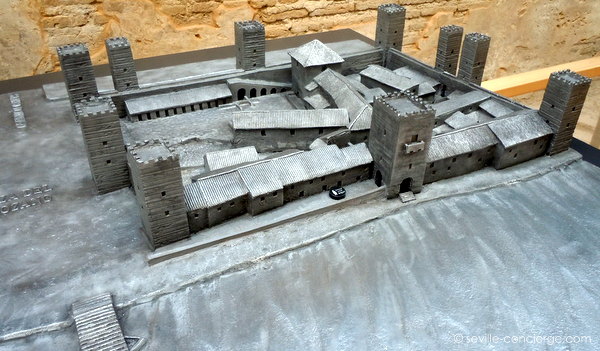
san jorge model

The Tribunal of the Holy Office of the Holy Office of the Inquisition, to give it its proper title, was established in 1480 by the Catholic monarchs Ferdinand of Aragon and Isabella of Castile, whose marriage in 1469 had effectively unified Spain for the first time, shortly before the surrender of the last Moorish stronghold of Granada in 1492. As well as the Islamic Moors, Spain had for a thousand years played host to a large Jewish population, and the primary purpose of the Inquisition was to enforce the unification of the country through a rigid Catholic orthodoxy, although it also conducted investigations into blasphemy, clerical misconduct, and, occasionally, witchcraft. Although the numbers are not precise, it’s thought that between 3,000 and 5,000 people were put to death before the Inquisition was formally disbanded in 1834.

In Seville, the Inquisition almost immediately established it’s headquarters in the Castillo San Jorgé, whose ruins can now be seen below Triana market and house a Museum of Tolerance which is well worth a visit.

Plaza del Altozano s/n
Tel 954 332 240
Opening hours: Mon-Fri 11.00-18.30 / Sat-Sun 10.00-15.00
Entrance free

The castle itself is certainly much older than this, and was certainly already there in 1171, when the Moors built the “bridge of boats” where the Puente Isabella II (usually known as Triana Bridge) now stands.

 san jorge museum

The Inquisition’s first victims in Seville are closely connected to a well-known local folk-history, that of Susona ben-Suson (the basic story is history, the embellishments are various and not guaranteed). Susona was the daughter of a wealthy Jewish banker, who, as harrassment of the Jews mounted in the late 1470s, started meeting in secret with other influential local Jews. It’s not known for certain whether actual sedition was being planned, but Susona made the mistake of telling her Christian boyfriend about them, and he in turn reported it to the authorities. The group were duly summoned by the Inquisition and later executed. Overcome with remorse, Susona never again left her house, and when she died her head was hung outside, by her own command, as a warning to others, and in Calle Susona in the Barrio Santa Cruz, the street named after her, you can still find a small tile plaque of a skull on the wall.

Los Reyes Magos

reyes-magosAlthough Father Christmas/Santa Claus has been gaining ground in recent years, in the south of Europe, and particularly the Spanish speaking world, the bringer-of-gifts is a much older figure, or more properly some much older figures, as there are three of them – the Three Wise Men of Biblical tradition, now more popularly known as Los Reyes Magos, the Magic Kings (Magos can be translated as either wizard or wise, and given that they “followed a star” they were probably astrologers). Although unnamed in the Bible, they have been popularly known since times immemorial as Melchior, Gaspar and Baltasar, and, despite the Pope’s recent assertion that they were Spanish, every Spanish child knows that they actually come one from each of the three continents, Melchior from Europe, Gaspar from Asia and Baltasar from Africa (no America or Australia in those days).

They don’t come at Christmas either, but on Epiphany, January 6, at the end of the holiday period, and they travel by camel, but they do visit every house in a single night. In the days before Reyes children must write a letter to the kings, so that they know what presents are to be delivered, but if they’ve been bad they may find that their only present is a lump of coal.

In Seville (and many other places in Spain) there is a big parade, the Cabalgata (cavalcade) de los Reyes during the afternoon and evening of January 5, and large crowds line the streets to watch the parade go by. The unique feature of these processions are the sweets that are thrown into the crowds for the children to pick up.

One last tradition is the food. Roscón de Reyes, made almost everywhere in the Spanish speaking world as part of the celebration of the Three Kings, is like a large doughnut with candied fruit (and these days, chocolate). It is common for these (if home-made) to contain “surprises”, small items for the children to find when the cake is eaten.

A Brief History of Tapas

We probably all know what tapas are (if you don’t they are those little plates of food that come with your drink, popular all over Spain, particularly in Andalusia, and even more particularly in Seville, the “home of tapas”). But why are they called “tapas”, how did they originate and why have they become such an integral part of the lifestyle?

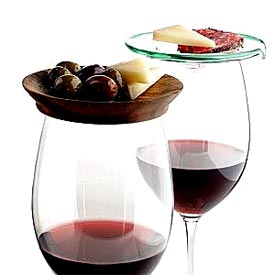
wine glasses and tapasThe first of these questions is relatively simple. In Spanish a “tapa” is a lid or cover, and the story is that tavern keepers would give their customers a slice of bread or ham to cover their drinks to keep out the dust and the flies (fruit flies are partial to a bit of sweet wine or sherry). It’s also possible that something strongly flavoured, like cheese, could be used to disguise the taste of poor quality wine.

This is also part of the answer to the second question, but not by any means the whole story. The most general reason probably goes back to Spain’s agricultural past. In the summer heat workers in the fields would start early, but the main meal of the day would be eaten just before the hottest part of the day, and was followed by the siesta, so to keep them going during the long mornings they would eat small snacks.

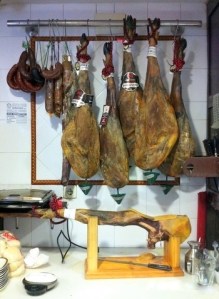
1-jamon ibericoThis is also a tale of three kings (but not The Three Kings). It is said that when the 13th century king Alfonso X “The Wise” became gravely ill his recovery was aided by eating small quantities of food and drink throughout the day, instead of full meals, while Felipe III in the early 17th century decreed that tavern keepers had to serve food with their drinks as a measure to combat the problem of drunkenness, especially among off duty soldiers and sailors. Later Alfonso XII (or possibly Alfonso XIII, an indication that the story may be apocryphal) is claimed to have been visiting a tavern in Cádiz and was served his drink with a slice of ham to keep out the sand blowing in from the beach. When he ordered another drink he asked for it with “the cover”. Over time the food that was served became more varied and more substantial, and going out for tapas became a common practice. The activity is also a very social one, and families and groups of friends would share their tapas while socialising, making this a very convivial activity in a way that is unusual for a more formal meal.

Introducing our History and Tapas Tour – a unique way to experience great food and learn about the history of both tapas and Seville

Spanish Charm – the Plazas of Santa Cruz

Plaza Virgen de los Reyes The Plaza Virgen de los Reyes, or Virgin of the kings, is the beautiful and iconic square between the Cathedral and the Barrio Santa Cruz. In the centre is the fountain designed and built for the 1929 Spanish-American exhibition, surmounted by an ornamental farola (street light), and its periphery is formed by three of Seville’s most important historic buildings, the cathedral (including the Giralda tower), the Archbishop’s Palace and the Convent of the Incarnation. Although these buildings are much older, the square itself was only created at the end of the 18th century by the demolition of administrative buildings belonging to the Church, and has only had its modern form since the remodelling of its eastern side for the widening of Calle Mateos Gago in the 1920s. Enjoy the view and the comings and goings of the horsedrawn carriages from one of the benches in the shade of the orange trees.
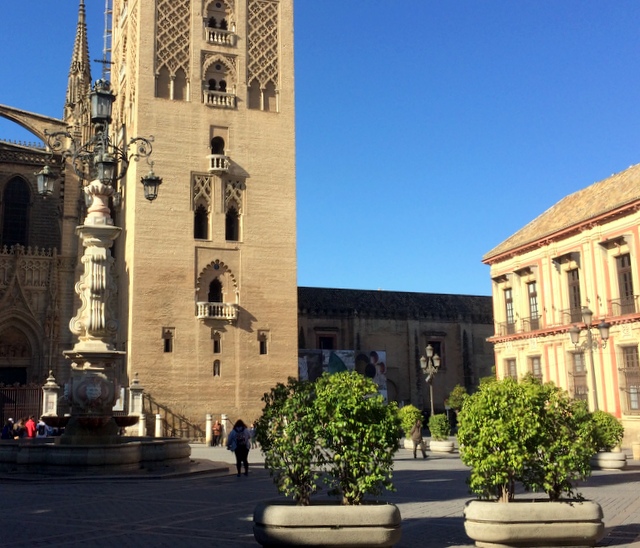
Plaza Virgen de los Reyes

Plaza Santa Marta Santa Marta is the little square next to Virgen de los Reyes, reached by way of the little alley behind the statue of the Pope. Even though it’s so close to one of the busiest places in the city it’s a little oasis of peace and quiet. The cross in the centre dates to 1564, but was only placed here in the early 20th century. The door to the right is the entrance to the Monastery of the Incarnation.

Plaza Santa Marta

Plaza del Triunfo Alongside Virgen de los Reyes is the Plaza del Triunfo, surrounded by Seville’s three world heritage sites, the Cathedral, the Alcázar Palace and the Archivos de Indias, as well as the Casa de la Provincia. The small monument in front of the Archivos, which gives the square its name, celebrates the safe completion of the mass that was interrupted by the Lisbon earthquake of 1755, whose effects were also felt in Seville. The modern appearance of the square, including the statue of the Immacualate Conception, whose steps are a popular gathering place, dates back to the early twentieth century.
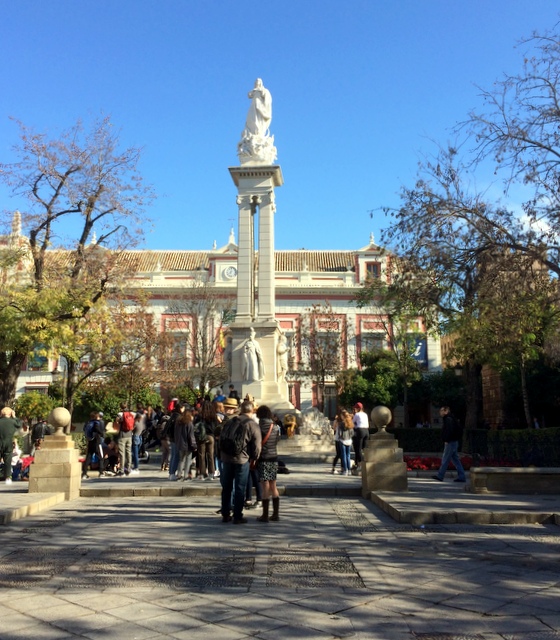
Plaza del Triunfo

Patio de Banderas Going through the archway beside the square brings you to the Patio de Banderas (Flags), where the Kings of Spain once greeted foreign ambassadors. Notable for its rectangular promenade formed by two rows of orange trees, and its fountain, it was recently the site of archaeological investigations which brought to light some of the earliest stages of the Palace’s history.

Patio de Banderas

Plaza de la Alianza This charming little square with a length of the old wall on one side and a simple central fountain, was once called the Plaza del Pozo Seco (the dry well).
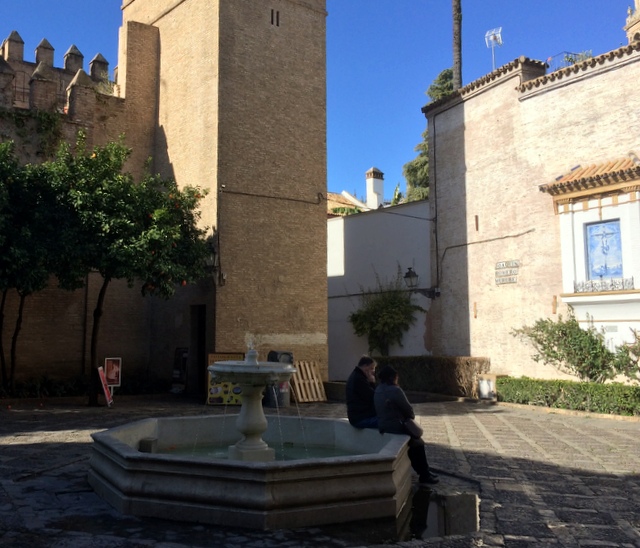
Plaza de la Alianza

Plaza Doña Elvira Possibly the most picturesque little square in Seville, and one of the most frequented by tourists, it’s supposedly the birthplace of Doña Elvira, the impossible love of Don Juan. The square was actually created as part of the redevelopment of the barrio for the Spanish-American exhibition, and owes much of its beauty to the symmetry of its orange trees, ceramic benches and central fountain.

Plaza Doña Elvira

Plaza Alfaro Plaza Alfaro is the little square at the entrance to the Murillo Gardens. Look for the Moreton Bay fig trees just inside, the water pipes in the exposed end of the old wall, and the ornate entrance to the Casa Palacio de la Marquesa de Pickman a few steps up Calle Lope de Rueda.
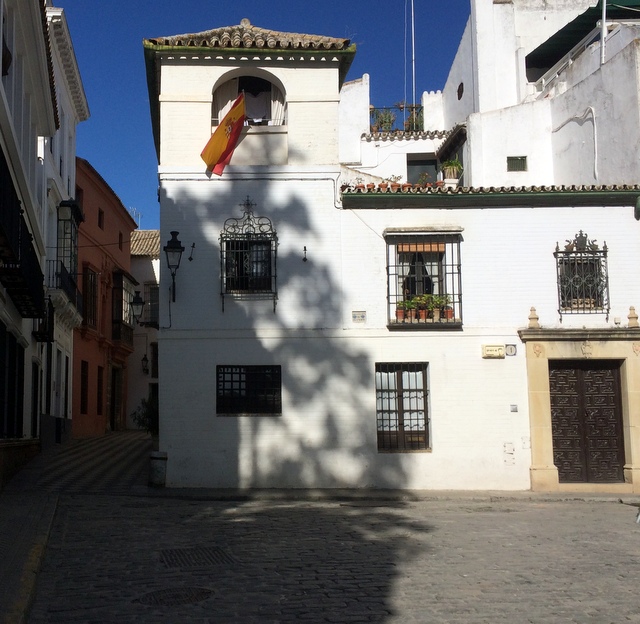
Plaza Alfaro

Plaza Santa Cruz Once the site of one the Jewish quarter’s three synagogues, and after the pogrom of 1391 of the parish church of Santa Cruz, the square was created by its demolition by Napoleon in 1811. The church was the burial place of the artist Bartolomé Murillo, as attested by the plaque in one corner of the square. The rather strange metal structure in the centre is the Cruz de la Cerrajería, once located at the corner of Calle Sierpes and Calle Cerrajería, and moved here in 1921. Notice the serpents and the little figures on the top corners.
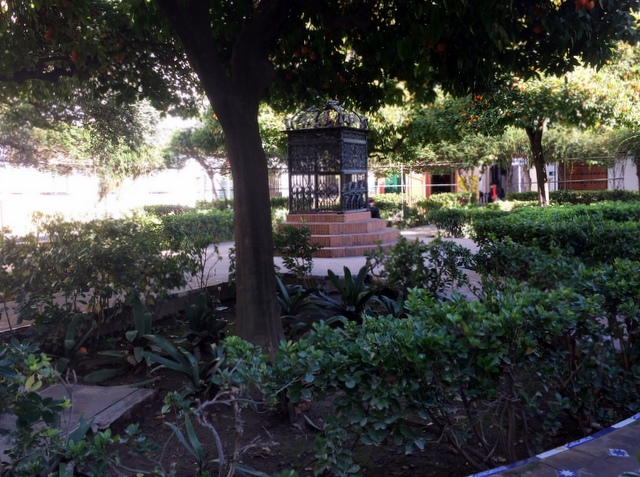
Plaza Santa Cruz

Plaza de los Refinadores Los Refinadores (the refiners) is another of the charming squares that are such a feature of the Santa Cruz. The circular benches around the five palm trees make a quiet and shady spot for a few minutes tranquil contemplation. The statue is of the legendary Don Juan Tenorio, and was erected in 1975. Also of interest is the Casa para Luis Prieto, which is the one on the corner with the big glassed-in balcony, designed by Aníbal González, who also designed the Plaza de España.
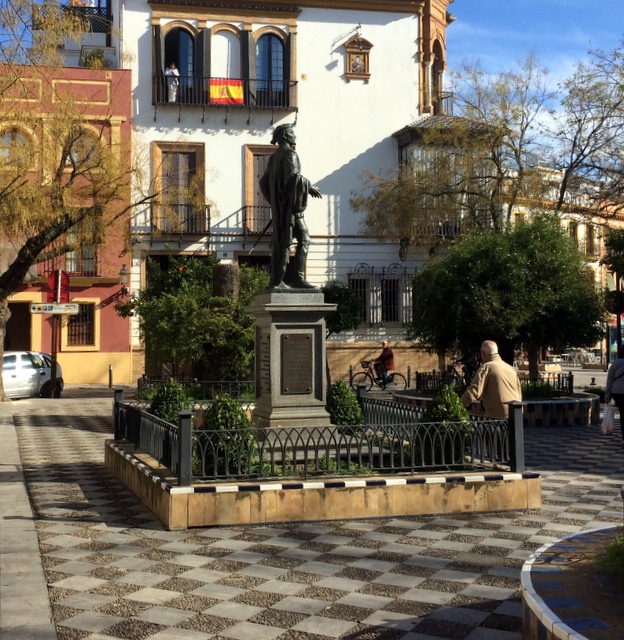
Plaza de los Refinadores
Roman Seville

Roman pillars - Alameda de Hercules
Roman pillars – Alameda de Hercules

The Romans first came to this part of Spain in the late 3rd century when they defeated the Carthaginians and occupied the little city of Seville. Under Roman rule Seville grew rapidly in size and importance, so that by the time of Julius Caesar it occupied a large part of what is now the Casco Antiguo. He is regarded as one of the founders of the city because he built the first stone walls around it, and though these are long gone, the later Moorish walls followed the same course for much of their route.

In fact, although Seville (then known as Hispalis) was one of the great cities of Roman Spain, there are relatively few known physical remains from that period of the city’s history.

Doubtless there are plenty of potential archaeological discoveries still lurking beneath the streets and houses of the modern-day city.

Just outside the city centre, in Calle Luis Montoto, are two surviving sections of the aqueduct that supplied water to the city (there is a third beyond the shopping centre at Los Arcos). The original source of the water was near the modern village of Los Cercadillos de la Huerta de Santa Lucía, about 17km outside the city in the direction of Carmona, though only the last 4km of the channel was on an aqueduct. Most surprising is that the aqueduct did not disappear simply as a result of the passage of time, but was demolished in the early 20th century in an act of civic vandalism.

Hidden away in Calle Marmoles (Marbles street) in the Barrio Santa Cuz are three enormous pillars that are all that remains of a Roman temple, probably to the goddess Diana. The footings of the pillars appear to be sunk in a deep pit, but in fact it is the level of the ground around them that has risen over the centuries. Two more pillars were moved to the newly created Alameda de Hercules in the 16th century, and now stand at its western end, topped by statues of the city’s founders, Hercules and Julius Caesar. A sixth pillar is known to have been broken at this time as a result of attempts to move it.

Aljibe Romano - Plaza de la Pescadería
Aljibe Romano – Plaza de la Pescadería

Even more hidden away is the aljibe, or water cistern under the Plaza de la Pescadería. It’s still in a good state of preservation, but isn’t normally open to the public. It’s theoretically possible to look down into the structure through the “skylights” in the square, but in practice it’s either too dark, or there’s too much light reflecting off the glass.

Definitely worth visiting is the Antiquarium, the museum and archaeological site under the Metropol Parasols in Plaza de la Encarnación, featuring Roman and post Roman ruins, including some well-preserved mosaics. The remains were discovered when work began on an underground carpark for the planned new market building in the square.

There are also Roman remains in the lower levels of the archaeological excavations in the Patio de Banderas, and Roman stones with inscriptions that were reused in the foundations of the Giralda tower. There is also known to be a Roman bath house under the foundations of the Archbishop’s Palace.

Roman objects and mosaics, mostly from nearby Italica, can also be found at the Archaeological museum in María Luisa Park, and in the Palacio de Lebrija in Calle Cuna.

Murillo Exhibition at Los Venerables

Right in the heart of the Barrio Santa Cruz, in a charming little square of the same name, is the Hospital de Los Venerables Sacerdotes (Hospital of the Venerable Priests), founded in 1673 by the dean of Seville Cathedral, Justino de Neve, as a home for sick and retired priests, and used for this purpose until the late 1970s. Apart from being quite big, it’s nothing particularly special from the outside, but like so many buildings in Seville the treasures, both arquitectural and artistic, are on the inside, looking away from the troubles of the world outside.

Today Los Venerables is an important museum of the Barroque period (roughly, the 17th century) in Seville, and brings together some of the works of the most gifted artists and architects of that period. It was designed by Leonardo de Figueroa, who also worked on the San Telmo Palace, the Fine Arts Museum, and the Church of Santa María Magdelena, and features an unusual central patio with elevated arcades and a sunken central fountain. The complex includes a church that is surely one of Seville’s hidden jewels. Although modest in size, with only a single nave, the harmony of the shape of the barrel-vaulted roof and the decorations and other artworks, principally by Juan de Valdés Leal makes this a very special place.

In rooms that were once the home of ageing priests are the museum’s art collections. The permanent collection focuses on the life and times of Diego Velázquez, and includes both works by Velázquez himself, as well as other important artists of the time.

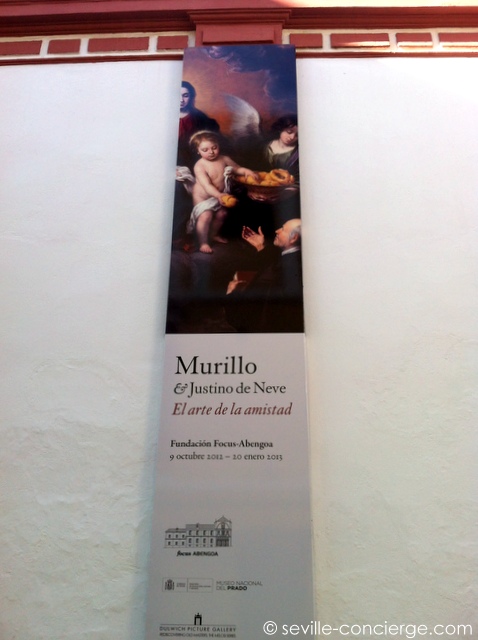
From October 9 until January 20, 2013 there is also a special exhibition of works by Seville’s most famous painter, Bartolomé Murillo, which has been brought together in collaboration with the Prado Museum of Madrid and London’s Dulwich Picture Gallery, and offers a unique opportunity to see them in the city where they were created.

Walls, Gates and Towers

In exploring Seville, you will often come across the terms “The Old Centre” or “Casco Antiguo”, referring to the area inside the city walls, which generally ran just inside what is now the inner ring road.

The first walls were built by the Carthaginians of wood and mud, but it was the Romans under Julius Caesar who built the first stone walls. These were several times destroyed and rebuilt, until work began in 1023 on those we see today. They were finally completed in the early 13th century, including a major westward extension in the 12th century to include the area around the new Grand Mosque (now the Cathedral). The wall was more than 6km long, with 13 gates, 6 postigos (small gates that were not considered as main entrances to the city) and 166 towers. Most of the walls were destroyed in the middle and late 19th century to allow for the expansion of the city.

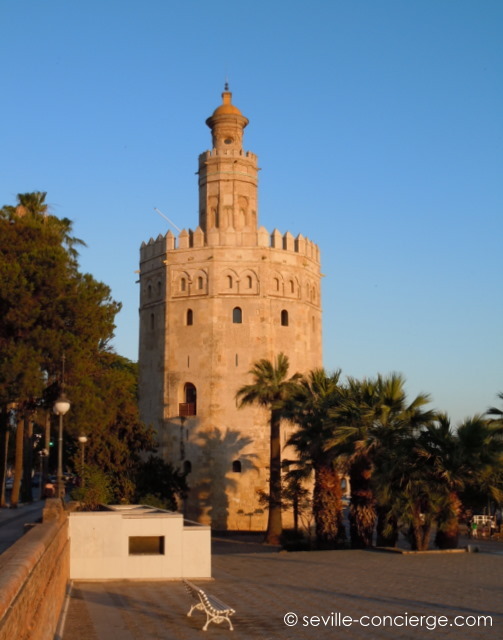
The two largest remaining sections of the wall that are still standing are those that separated the Alcázar Palace from the city, which you can see in the Plaza del Triunfo and Calle Agua (Water Street, so named for the pipes inside the wall that brought water from the Roman aqueduct into the Alcázar). The Gold and Silver towers, and the Tower of Abd-al-Aziz can also be seen in this southern part of the city.

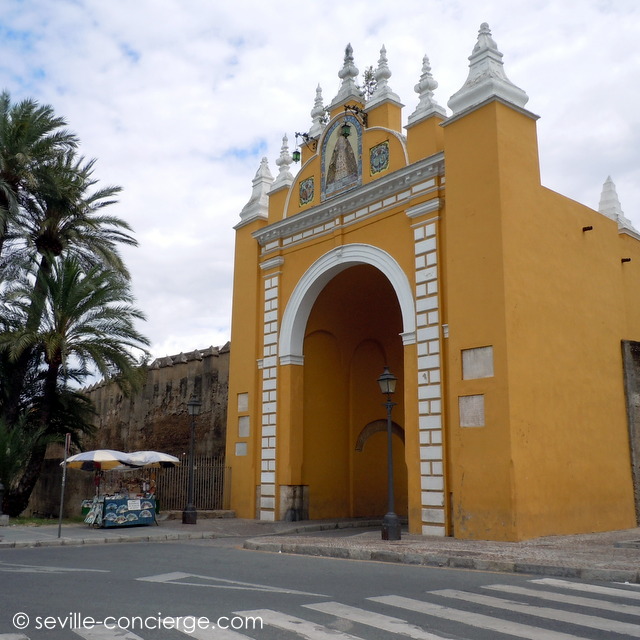
In the north of the city is the longest surviving piece, between the Macarena Gate (rebuilt in the 18th century), and the Córdoba Gate. This is the best place to see how the walls might have looked to anyone approaching the city.

Also still surviving are the Postigo del Aceite, and the walls around the Jardines del Valle, near the Puerte del Osario, as well as a number of fragments where the walls were incorporated into various buildings around the city. Some of these were only discovered when the buildings were renovated. The names of many of the gates still survive, however, such as the Puerta Arenal, Puerta Carmona and Puerta de la Carne.

Perhaps the most poignant, however, is the short section of wall that you can still see in Calle Fabiola. It’s all that’s left of the internal wall that separated the old Jewish quarter from the rest of the city.

On Idling

You may think that being lazy and idling amount to pretty much the same thing, but nothing could be further from the truth. Laziness consists solely and simply of “not doing anything”, including, and indeed especially including, those things that you have an obligation or necessity to do. Idling, on the other hand, is a positive condition of “doing nothing”, a freely chosen leisure time activity once essential business has been taken care of. The trick here is to know what’s really essential, and not to worry about anything else you haven’t done. There’s always mañana. Rich idlers will of course have other people to do these things for them, leaving them more time to devote to being the idle rich.

So what does idling involve? Since you’re on holiday, a little light strolling is permitted, even encouraged, but nothing too strenuous. Advantage should be taken of any benches in quiet shady plazas and gardens for sitting and reflecting, or for advanced idlers, simply sitting. This may, of course, be extended to bars and cafes, but a word of warning for inexperienced idlers. While the enjoyment of a drink is part of the art of idling, the drink is also a prop or symbol. Excessive drinking and inebriation are frowned upon, especially if they lead to behaviour that interferes with the idling of others.

If you’re idling in unfamiliar surroundings it can be useful to have someone along to show you the best places and explain the local etiquette. I happen to have a lifetime’s experience in every aspect of the art of idling, and so if you’re in Seville I would be delighted to share my expertise and local knowledge with you.